Basements and lower levels
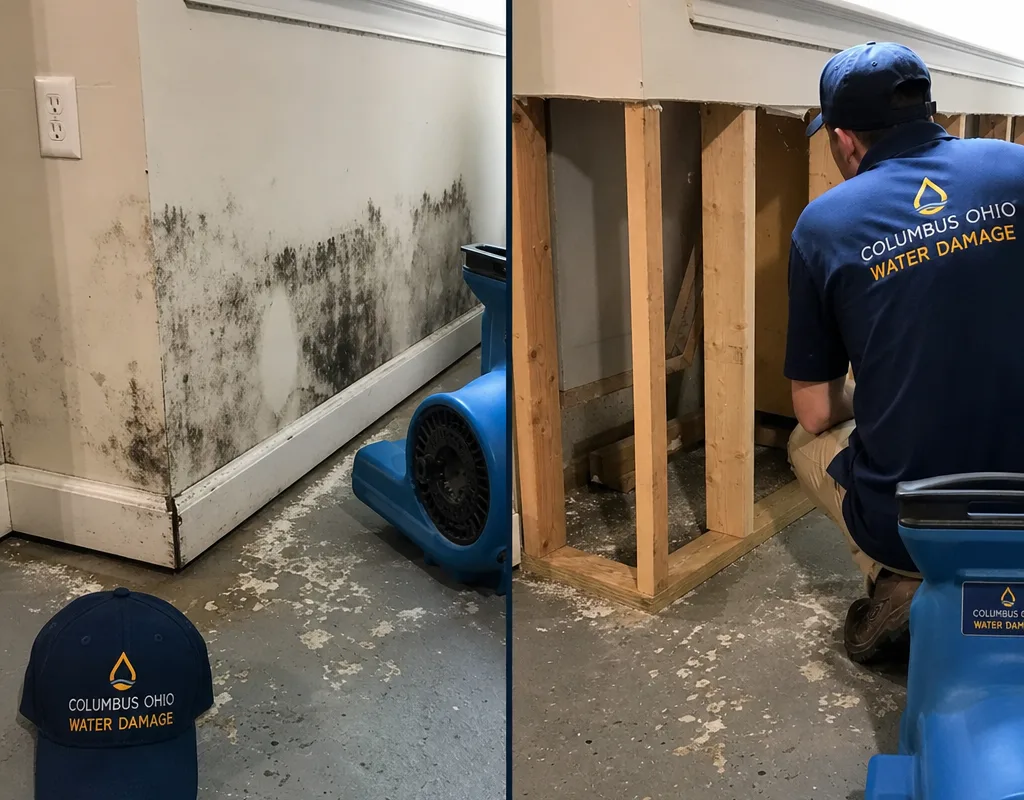
Mold on framing, drywall edges, and stored items after seepage or high humidity. Basements can stay damp long after the surface looks dry.
Serving Columbus & surrounding areas
24/7 Emergency Response
If you smell a musty odor, see staining, or had a recent leak, get a clear plan to remove the mold safely, fix the moisture source, and keep it from coming back.
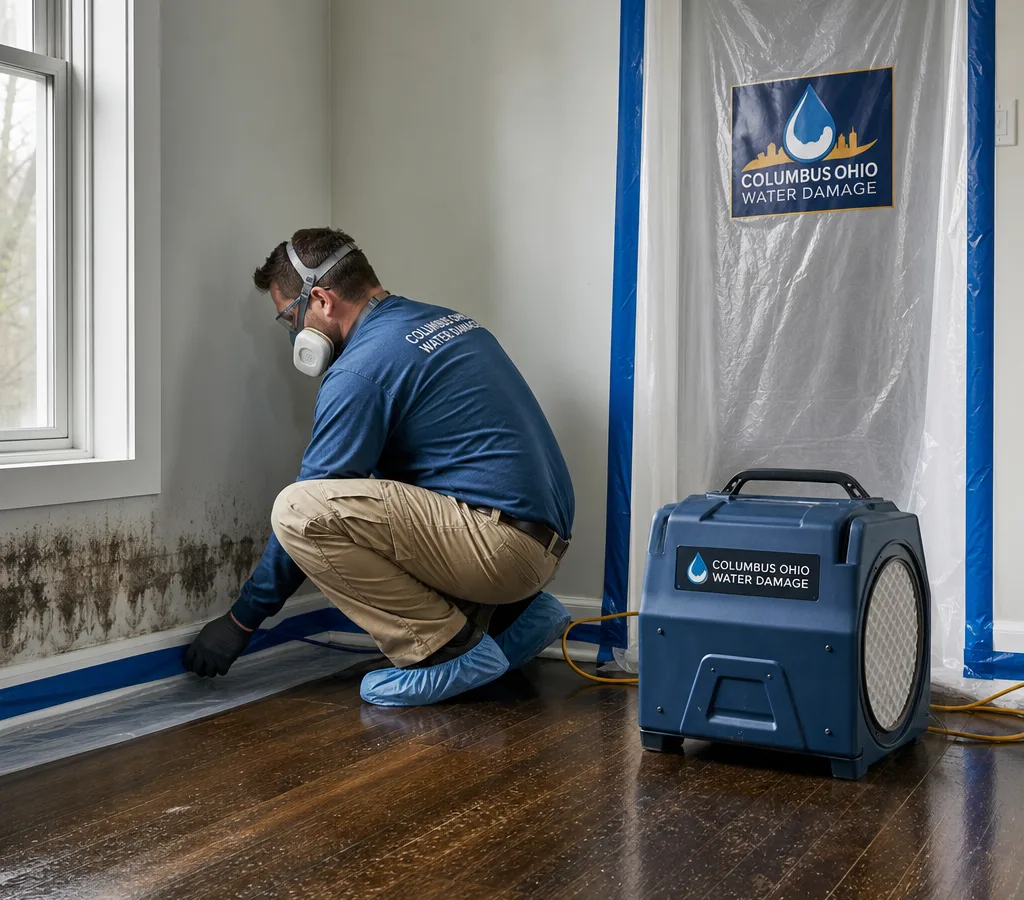
We assess the affected area, identify likely moisture sources, and define the containment, removal, cleaning, and drying needed before repairs begin.
Mold is a moisture problem first and a cleanup problem second. If the water source is still active—a slow plumbing leak, a damp basement wall, or an HVAC drain issue—cleaning alone won't hold.
Columbus Ohio Water Damage provides mold removal in Columbus with a practical approach: confirm where moisture is coming from, contain the work area, remove impacted materials when needed, clean and HEPA-vac what can be saved, then dry the structure to a normal moisture level before rebuilding or repainting.
Homes around Columbus often deal with wet basements and crawlspaces after heavy rains, plus condensation issues during humid summer stretches. Those conditions can keep framing and drywall damp long enough for mold to spread behind finishes where it's hard to spot. A proper inspection and written scope helps avoid guesswork and unnecessary demolition.
If mold growth followed a leak or flooding event, the structure should be dried correctly before repairs are closed up.
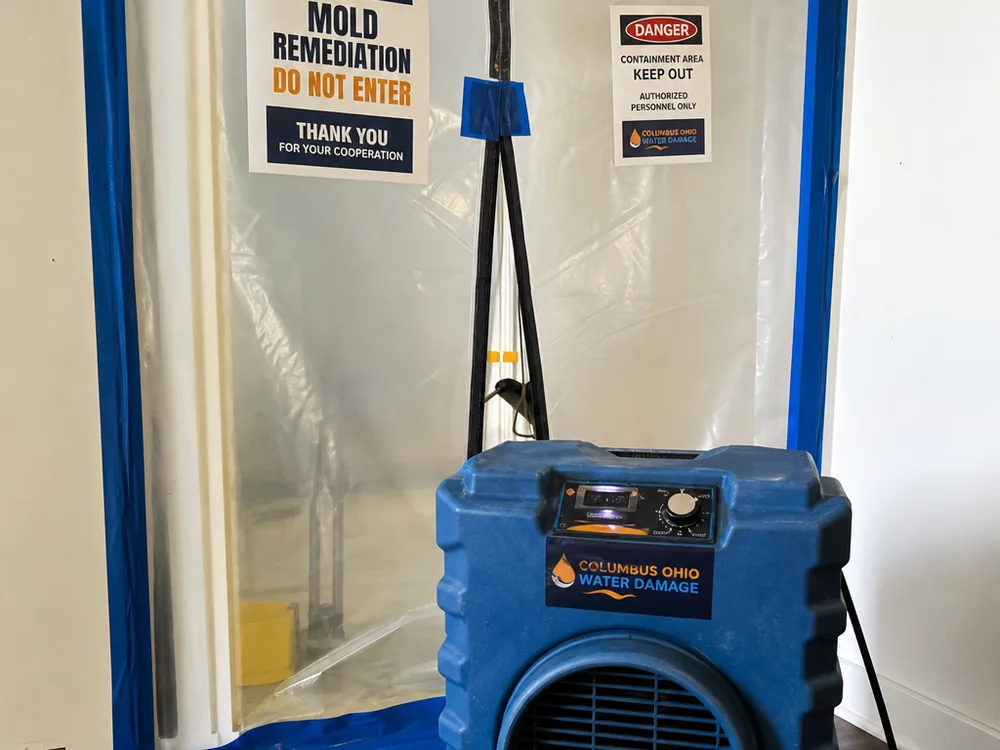
A professional mold removal job should be built around containment and controlled removal, not just spraying a chemical.
Typical scope items include:
When quotes differ, compare the containment plan, moisture verification, and drying scope—not only the amount of material proposed for removal.
Mold on framing, drywall edges, and stored items after seepage or high humidity. Basements can stay damp long after the surface looks dry.
Slow leaks under cabinets and behind dishwashers can feed mold for weeks without obvious puddling.
Poor ventilation and warm, moist air can lead to mold on roof sheathing. The moisture pathway must be addressed along with cleaning.
Recurring condensation and weak exhaust can cause growth on drywall paper, around trim, and behind toilets or vanities.
Clogged condensate drains, poorly insulated ducts, or cold surfaces can support mold around registers and in closets.
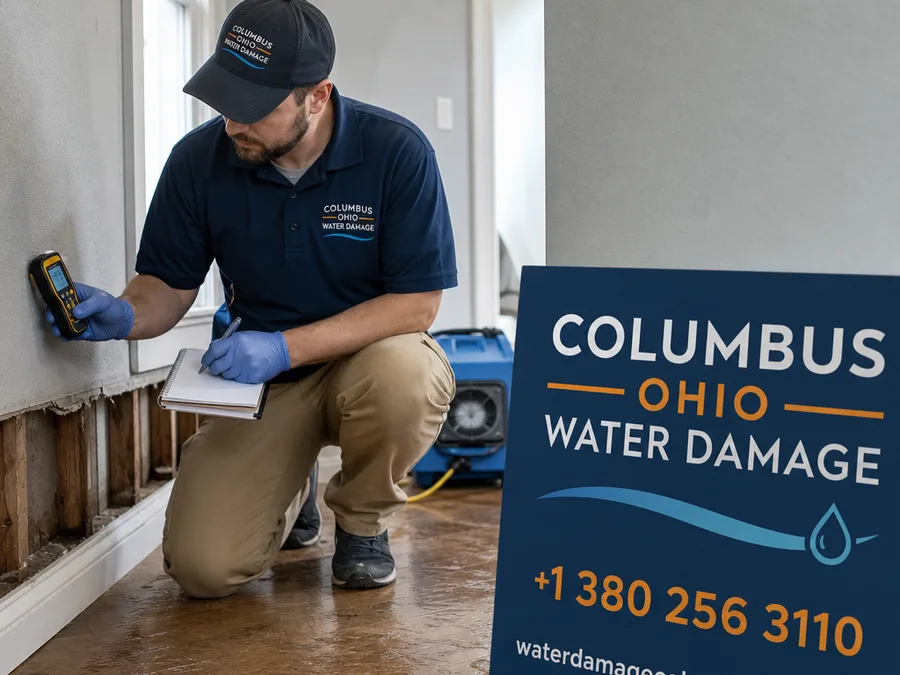
We identify affected areas, check likely moisture sources, and document conditions. If a small opening is needed to inspect behind drywall, we explain why first.
We isolate the work area and establish negative air as appropriate to reduce cross-contamination into adjacent rooms and HVAC pathways.
When drywall, insulation, carpet pad, or warped baseboards cannot be saved, we remove and bag debris within the contained area.
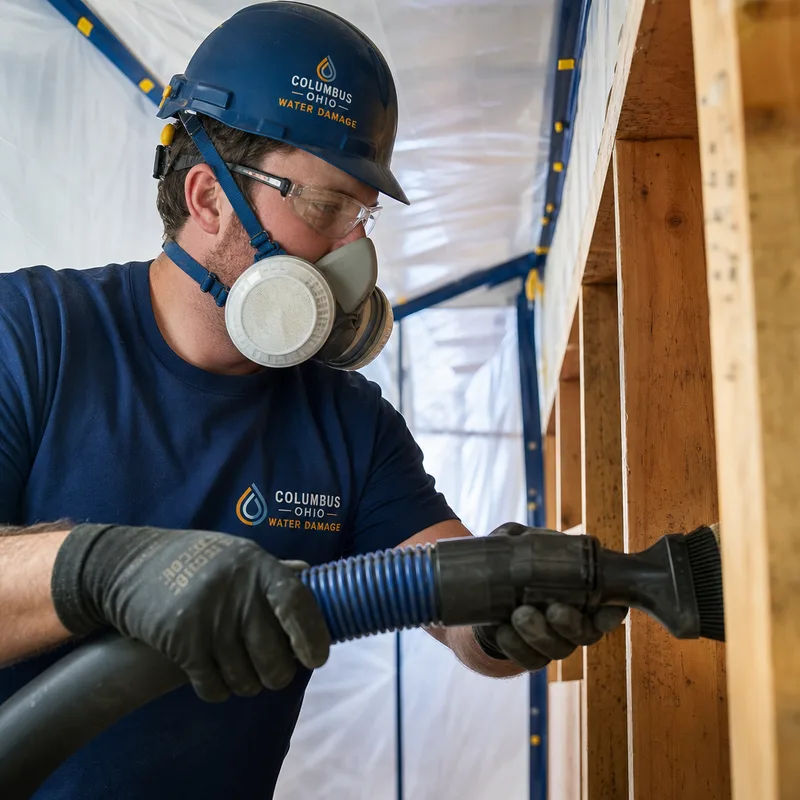
We HEPA-vac surfaces and clean using methods matched to the material. The goal is physical removal of growth and residue—not masking odors.
Equipment runs until moisture returns to a normal range. Readings help confirm repairs will not seal damp framing inside the wall.
You receive a clear scope of what was removed, what needs rebuilding, and which ventilation, drainage, dehumidification, or leak repairs can help prevent recurrence.
Mold removal in Columbus typically ranges from about $900 to $3,500 for a contained, localized area, while larger multi-room or basement projects often run $4,000 to $10,000+ when demolition and rebuild preparation are involved. Small surface cleaning in one spot can cost less, but only when the underlying moisture issue is resolved.
Final pricing depends on the affected area, the porous materials that must be removed, access conditions, containment requirements, and the drying and monitoring required. A site inspection with moisture readings is the reliable way to confirm scope and cost.
Start times depend on scope and safety needs, but many projects can begin quickly once the affected area is assessed and containment requirements are known. If mold followed a recent leak, stopping the source and beginning drying early helps keep the problem from expanding behind finishes.
Most customers do not need testing to begin removal when visible growth and moisture damage already justify remediation. Testing can help when symptoms exist without visible mold, the affected area cannot be located, or specific documentation is required.
Often, yes, when the area can be contained and isolated, but it depends on location and occupants. If mold is near an HVAC return, in a main living space, or occupants have respiratory sensitivities, avoiding the immediate area may be appropriate until cleaning and drying are complete.
Sometimes, when growth is limited to a cleanable surface and the drywall is dry and intact. Wet, swollen, soft drywall or growth on the paper backing usually calls for removal because it cannot be cleaned reliably.
Mold returns when moisture returns. Common causes include unrepaired slow leaks, humid basements without dehumidification, and condensation from poor ventilation. The removal plan should include moisture control—not only cleaning products.
Coverage varies by policy and cause. Mold related to a sudden accidental water event may be treated differently from long-term seepage or maintenance issues. Document what happened, when it was noticed, and visible water damage before discussing the loss with your carrier.
Tell us what you're seeing and where, and we'll recommend the next step: inspection, containment, removal, and drying. You'll get a straightforward plan that addresses the mold and the moisture that caused it.