After a leak or water event
If materials were wet for more than a day or two, testing can confirm whether conditions supported growth and whether indoor air is being affected.
Serving Columbus & surrounding areas
24/7 Emergency Response
If you smell something musty, see staining, or have unexplained allergy-like symptoms indoors, a proper inspection and lab analysis can tell you what you are dealing with and where it is coming from.
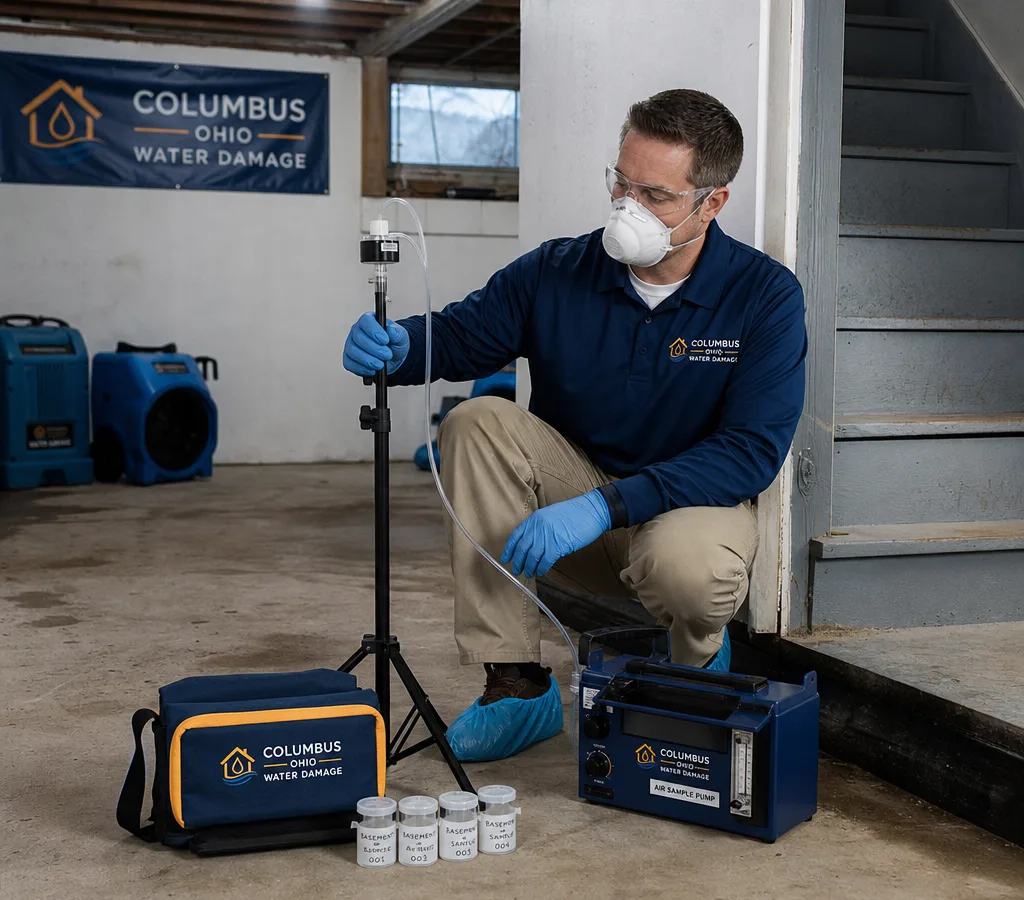
Searching for mold testing Columbus Ohio usually means you want clarity, fast. Maybe a basement smells earthy after rain, a bathroom ceiling keeps spotting, or a real estate transaction is asking for documentation.
Columbus Ohio Water Damage provides mold testing focused on two things: identifying whether mold is present at elevated levels, and pinpointing likely moisture sources so the next steps are sensible. Testing is not just taking a quick sample. A useful report ties together what we see on site—humidity, visible growth, water staining, and ventilation patterns—with what the lab finds.
If you are also dealing with an active leak, wet drywall, or a recent flood, it is often best to stabilize the moisture situation first so test results reflect the current conditions. When water intrusion is part of the story, stopping the source and drying materials should come before deciding what sampling is needed.
A mold test is most valuable when it answers a specific question. We will talk through what prompted the concern and then choose sampling that fits the situation.
Common testing approaches include:
What we avoid is unsupported conclusions. No test can tell you exactly when growth started, and a single sample rarely represents an entire building. The goal is a defensible snapshot with enough context to guide decisions: clean, remove, fix moisture, or expand the inspection.
In Columbus, testing often starts in lower levels because many homes have basements and humidity can build around rim joists, storage rooms, and finished basement walls—especially after heavy rain or when dehumidification is inconsistent.
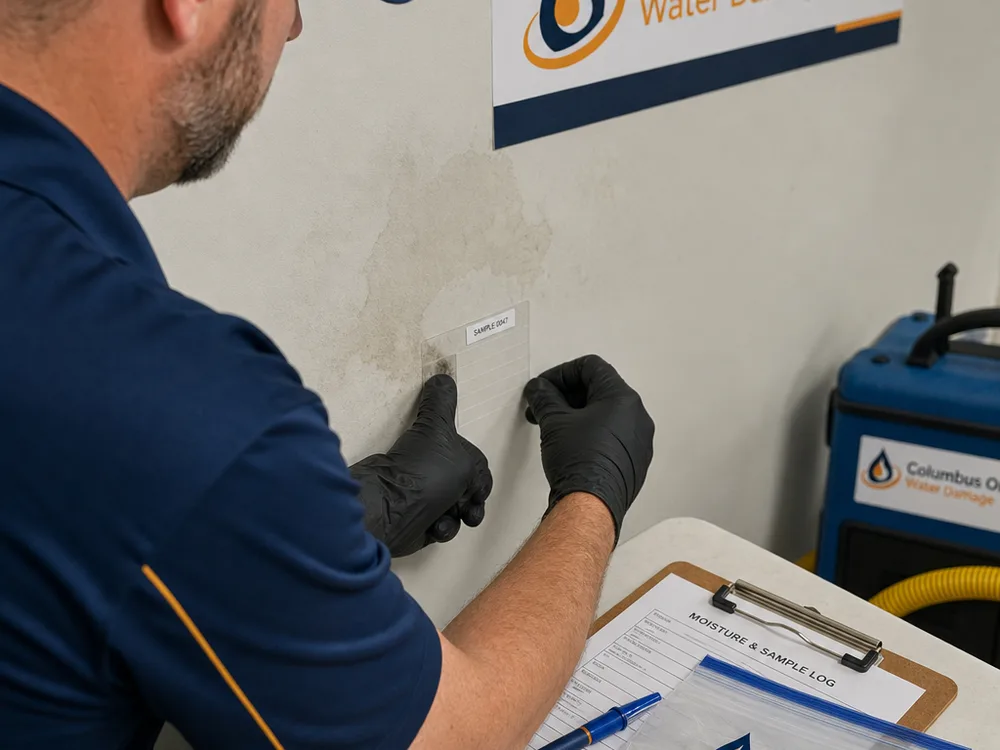
If materials were wet for more than a day or two, testing can confirm whether conditions supported growth and whether indoor air is being affected.
Odor often comes from hidden areas like wall cavities, basement finishes, or under flooring. Targeted inspection plus sampling can narrow the search.
Buyers and sellers often need a clear inspection record. A straightforward scope and lab results reduce uncertainty during negotiations.
Chronic moisture from poor ventilation or cold surfaces can drive repeated spotting. Testing helps confirm whether it is mold and guides prevention.
Testing can help determine if a particular space has elevated airborne spores compared with the outdoor baseline.
We walk the areas of concern, looking for staining, damp building materials, condensation patterns, and ventilation issues. Moisture meters are used where appropriate so sampling is based on evidence, not guesswork.
We decide whether air samples, surface samples, or both are needed. If you want to evaluate a finished basement versus the main living level, we sample in a way that makes that comparison meaningful.
Samples are labeled by location and conditions. Air samples are taken with consistent run times and placement so results are comparable across rooms.
A qualified lab identifies spore types and counts for air samples or confirms growth on surfaces. We translate the report into practical next steps: what to address first and what is likely driving the problem.
If results point to hidden moisture, we can outline what areas to open for confirmation, what to dry, and what repairs should be prioritized to keep the issue from returning.
Mold testing in Columbus typically ranges from about $250 to $750+, depending on how many areas are sampled and whether you need air samples, surface samples, or both. A basic inspection with 1 to 2 samples often lands at the low end, while larger homes, multiple floors, or a finished basement plus attic can push costs higher.
Your final price mainly depends on sample count, access to suspected areas, and whether moisture mapping or additional investigative work is needed. Exact pricing is confirmed after the on-site inspection and a sampling plan is agreed on.
Mold needs moisture. In Columbus, we often see concerns tied to a few repeat patterns, especially in homes with basements and mixed old-and-new construction.
If a room smells musty but looks clean, the most useful next step is usually a careful inspection paired with targeted sampling, not random tests in every room. We focus on areas where the building science supports the suspicion.
If you already had a water loss and want to prevent secondary problems, professional drying should include deliberate equipment placement and measurable moisture targets.
If you need mold testing for a real estate deadline, a persistent odor, or peace of mind after a leak, tell us what you are seeing and we will recommend a sampling plan that matches the situation.
Most lab results are available within a few business days after sampling, and timing depends on the lab's current workload and the type of analysis requested. We can usually schedule the on-site inspection quickly, then submit samples the same day they are collected when conditions allow.
A store-bought kit can show that mold spores exist, but it often cannot tell you whether levels are elevated indoors or where the moisture problem is. If you need actionable answers for a specific room, a real estate situation, or ongoing symptoms, professional sampling with an outdoor baseline and documented locations is typically more useful.
We can't confirm mold inside a closed cavity without access, but we can screen for indicators using moisture readings, visual cues, and targeted air or surface sampling near the suspect area. If results and conditions point to a hidden source, we will explain what limited opening would verify it with the least disruption.
Keep windows closed for several hours beforehand if possible, avoid running air purifiers right before sampling, and do not clean or disturb the suspect area. If there was a recent leak or flooding, share what got wet and what was dried so the sampling plan reflects the real timeline.
Testing can show spore levels and types in the sampled areas and whether they are elevated compared with an outdoor baseline, but it does not provide a universal “safe” label for an entire building. The most reliable interpretation combines lab results with what we see on site, including moisture conditions and whether there is active growth.
Yes, we can provide written findings tied to sample locations and lab results so a third party can understand what was tested and what the results mean. If the situation also involves recent water intrusion, documenting the cause and the drying steps is often helpful during negotiations.
Share what you are noticing, where it is happening, and any recent moisture history. We will inspect, sample appropriately, and give you clear next steps based on lab results.