Supply line and plumbing leaks
Small leaks under sinks, behind toilets, or at shutoffs can soak cabinets and subfloors for days before you notice. We trace migration, dry cavities, and repair finishes.
Serving Columbus & surrounding areas
24/7 Emergency Response
Fast, careful drying and repair for leaks, floods, and burst pipes in Columbus. We identify the source, document what happened, and rebuild the damaged areas so your home is safe and livable again.
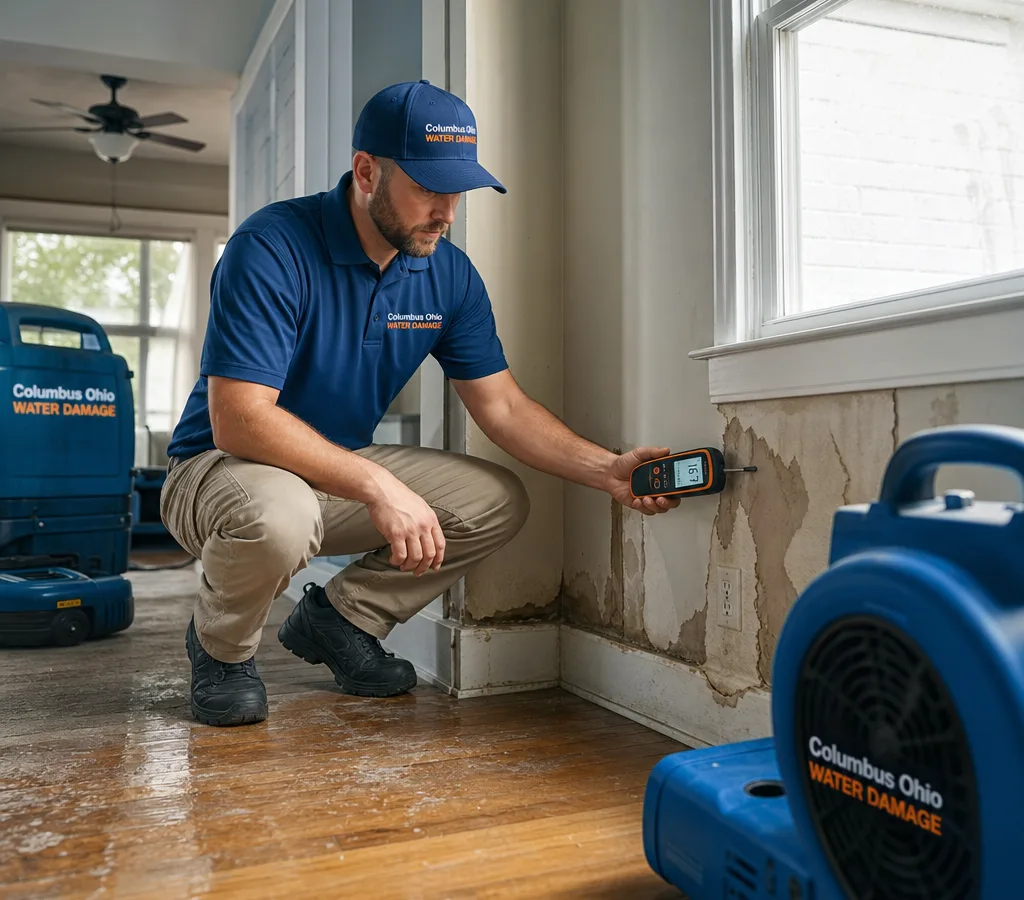
Water moves quickly through drywall, insulation, flooring, and framing. Prompt source control, extraction, and verified structural drying can improve the chance of saving walls, cabinets, and flooring.
If you are dealing with water damage in Columbus, OH, time matters more than almost anything else. Water moves fast through drywall, insulation, flooring, and framing. The sooner the water is stopped, extracted, and the structure is dried with the right equipment, the more likely it is that walls, cabinets, and flooring can be saved.
Columbus Ohio Water Damage handles water damage repair for homes and small commercial spaces across Columbus, including the 43201 area and surrounding communities. We start by finding where the water came from, then build a clear plan covering what can be dried in place, what needs removal, what repairs are required, and how long the work should take.
You will get straight answers about condition, risk, and next steps. If an insurance claim is involved, we can provide documentation that typically supports the claim, including moisture readings, photos, and a written scope of work.
Water damage repair is the full path from wet materials to a finished, usable space. The work usually breaks into two parts: mitigation to stop the damage and dry the structure, then repairs to put everything back.
Typical mitigation steps include:
Typical repair steps include:
What this service does not include is guessing. We do not decide a room is dry based on how it looks. We verify drying with moisture readings and document the results so you can move forward with confidence.
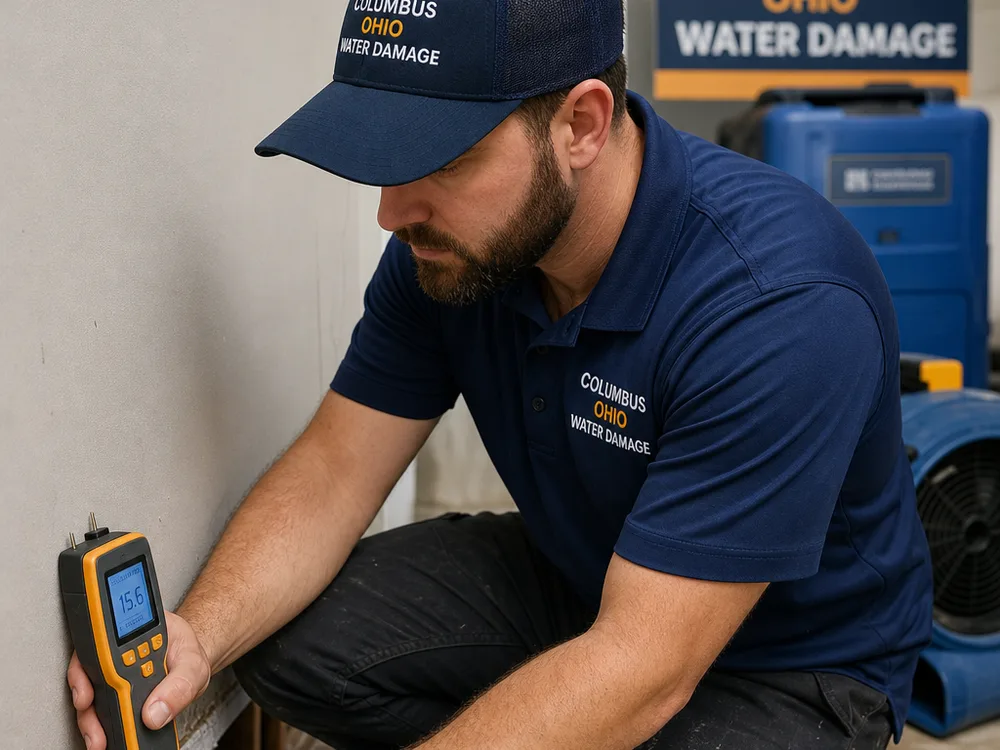
Small leaks under sinks, behind toilets, or at shutoffs can soak cabinets and subfloors for days before you notice. We trace migration, dry cavities, and repair finishes.
Dishwashers, washing machines, and water heaters can flood adjacent rooms. We extract water, check the subfloor, and address trapped moisture under flooring.
Heavy rain and poor drainage can lead to seepage. We dry concrete and framing, remove wet finishes, and document conditions for next-step waterproofing decisions.
When a line bursts, water spreads quickly through ceilings and walls. We open affected areas strategically to dry framing and reduce the chance of secondary damage.
If the water is Category 3 or otherwise contaminated, repairs usually require removal of porous materials and careful cleaning before rebuilding.
We identify the category of water—clean, gray, or sewage—check for electrical or slip hazards, and confirm the water source is stopped or isolated.
We use moisture meters and thermal imaging as appropriate to map where water traveled, including behind baseboards, under flooring, and into adjacent rooms.
Standing water is extracted first. We then place dehumidifiers and air movers to create controlled airflow across wet surfaces and through cavities.
Drying is monitored with readings, not assumptions. We adjust equipment placement and containment based on progress and material types.
After drying is verified, we repair drywall, trim, paint, and flooring as needed. When cabinetry or specialty trades are required, we coordinate the sequence so the space finishes cleanly.
Water damage repair in Columbus, Ohio shows up differently depending on the building and the area.
Victorian Village and Italian Village: Older housing stock can mean plaster walls, layered flooring, and tight cavities. Drying can take longer, and careful selective demolition matters when preserving original trim or avoiding unnecessary wall openings.
Clintonville: Many homes have basements and mature tree cover. Water often affects finished basement walls and flooring, making it important to dry framing behind finishes before odor and microbial growth begin.
Downtown and Short North: Condos and mixed-use buildings often involve shared walls, stacked plumbing, and HOA requirements. Moisture-migration documentation and clear communication help protect the affected unit and reduce disputes with adjacent spaces.
For losses larger than a single room, broader water damage restoration work can cover mitigation and coordination across affected areas.
Water damage repair in Columbus typically ranges from $900 to $6,500+, depending on how far the water traveled and what materials need to be removed and rebuilt. A small localized leak with minor drywall and paint repairs may fall at the low end, while basement flooding or multi-room damage with flooring replacement can reach the higher end.
Final pricing changes with moisture extent—including hidden wet insulation—water category, drying time, access to affected areas, and how much finish work is required to match existing surfaces. The exact cost is confirmed after an on-site inspection and moisture mapping.
“A supply line failed under our kitchen sink and the water got into the dining room floor. They explained what could be saved, set up drying the same day, and the repairs blended in better than I expected.”
“We had water in the basement after a storm and I was worried about mold behind the walls. The team took moisture readings every visit and only opened up what they needed to dry it correctly.”
Yes. We can manage the mitigation—extraction, drying, and selective removal—and then complete repairs such as drywall, trim, paint, and flooring so the space is returned to normal use.
Start as soon as the water source is stopped and it is safe to enter, because wet drywall, insulation, and wood framing can hold moisture that is harder to remove later. Early extraction and professional drying often reduce how much material must be removed.
Sometimes, but only when drying can be verified with moisture readings and the water category is appropriate. If insulation is saturated, moisture is trapped behind vapor barriers, or the water is contaminated, removal is often the safer and faster route.
Clean water may allow more materials to be dried when addressed quickly, while sewage or highly contaminated water usually requires removing porous materials such as carpet, pad, drywall, and insulation. The category affects cleaning, disposal, and rebuilding scope.
Yes. When a claim is involved, we provide the kind of documentation insurers commonly request, including photos, moisture readings, equipment logs when applicable, and a written scope that separates mitigation work from repairs.
Drying commonly takes several days, and repairs can add time depending on material availability and the amount of finish work needed. A single-room leak might be repaired within a week, while multi-room damage or flooring throughout can take longer after drying is verified.
Tell us what happened and what areas are wet. We will inspect, map the moisture, and lay out the steps to dry and repair your space in Columbus so you can make a confident decision about timing and budget.